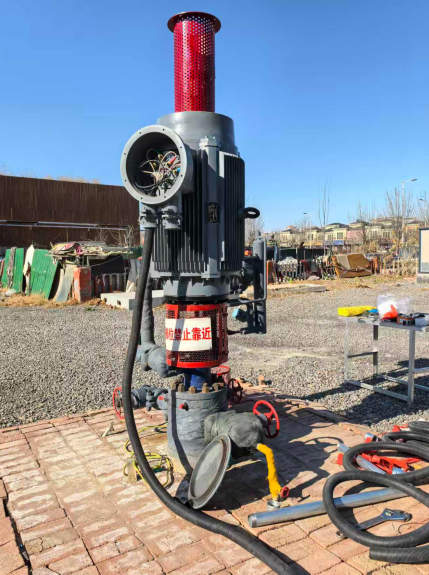
Question 1: Decline in magnet performance, insufficient power output
Reason: In high-temperature environments, the magnetic steel ages or impurities accumulate, affecting its magnetic properties.
Solution: Replace the radial magnetizing magnets with those capable of withstanding 180°C high temperatures to ensure compatibility with underground high-temperature conditions. Regularly clean impurities from the magnet surfaces, inspect the magnetic levitation clearance, and maintain stable magnetic pull forces.
Question 2: Sealing components are leaking, resulting in decreased insulation performance
Reason: Wear of the annular series-sealed structure, or loss of elasticity in the PEEK breathing material.
Solution: Replace worn sealing components to extend the sealing life by 2-3 times. Check the integrity of PEEK material; if its elasticity decreases, replace it to ensure proper automatic pressure balancing and prevent well fluid from interfering with insulation.
Question 3: Control chip failure, resulting in uncontrolled device operation
Reason: The 32-bit DSP control chip is overheating, or there is dust accumulation and short circuit on the PCB circuit board.
Action: Clean the dust on the PCB board, blow it with dry compressed air at a pressure of 4–6 kg/cm², and check the condition of the capacitors. Ensure proper heat dissipation for the chips, calibrate the PID and fuzzy control parameters. If a chip fails, replace it and re-adjust the logic settings.
Question 4: The cooling fan is damaged, resulting in ineffective heat dissipation.
Reason: The cumulative operating time exceeds 20,000 hours, or there may be fan bearing wear or circuit failures.
Handling: Regularly record the fan operation time, and replace it in a timely manner when it reaches the replacement cycle. Check the fan circuit wiring, secure the terminals, and clean the dust around the fan to ensure the stability of the cooling system.

Go Top

 Hotline:
057983718080
Hotline:
057983718080
 Scan
Scan



 Location: