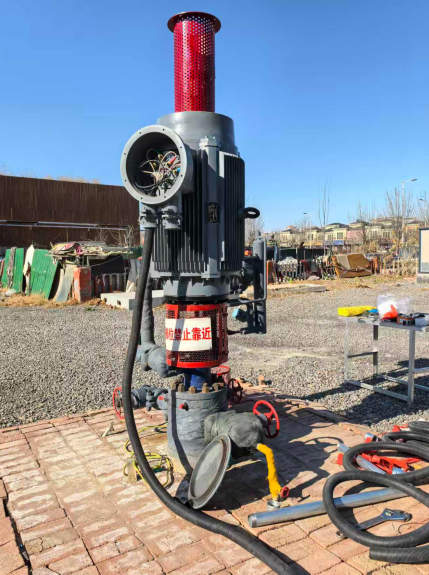
Question 1: Insufficient rotational speed adjustment accuracy, deviating from the ±1Rpm standard
Reason: Abnormal signal from the front cover rotation position sensor, or malfunction in the controller's coordinated speed regulation function.
Solution: Check the firmness of the position sensor installation, clean dust and impurities from the sensor surface to ensure stable signal transmission. Verify the coordination between the position sensor, power converter, and controller. Re-calibrate the speed control logic, adjust the current level and power-on/off timing to restore accurate rotational speed.
Question 2: Excessive starting current and insufficient starting torque
Reason: Loose stator winding connections, or incorrect switching logic of the electronic switch’s power-on phase sequence, resulting in failure to meet the standard requirements of 200% starting torque and 30% rated starting current.
Action: Secure the connections of each pole’s concentrated winding in the stator, and check the insulation of the windings. Re-adjust the electronic switch’s phase sequence switching logic, optimizing the power-on sequence according to the “minimum reluctance principle” to ensure precise coordination between rotor salient poles and stator salient poles. This will reduce the starting current and increase the starting torque.
Question 3: Excessive motor temperature rise affects operational reliability
Reason: The laminations of the rotor silicon steel sheets are loose, or the heat dissipation environment is poor, exceeding the allowable temperature rise range for the motor.
Action: Check the pressing condition of the rotor silicon steel sheets, tighten any loose parts to ensure adequate mechanical strength. Optimize the installation environment by avoiding working in enclosed spaces and ensuring proper ventilation and heat dissipation. In high-temperature outdoor conditions, additional cooling devices can be installed to accommodate harsh operating environments.
Question 4: Overcurrent occurred during overload operation
Reason: The overload exceeds the motor's capacity, or the controller's overload protection logic fails to trigger properly.
Solution: Reduce the load to within the rated range. If short-term overload is necessary, confirm the motor’s capacity to handle it. Check the controller’s overload protection function and calibrate the action parameters to ensure that the speed automatically returns to the set value once the load is restored, thereby preventing component damage due to overcurrent.

Go Top

 Hotline:
057983718080
Hotline:
057983718080
 Scan
Scan



 Location: